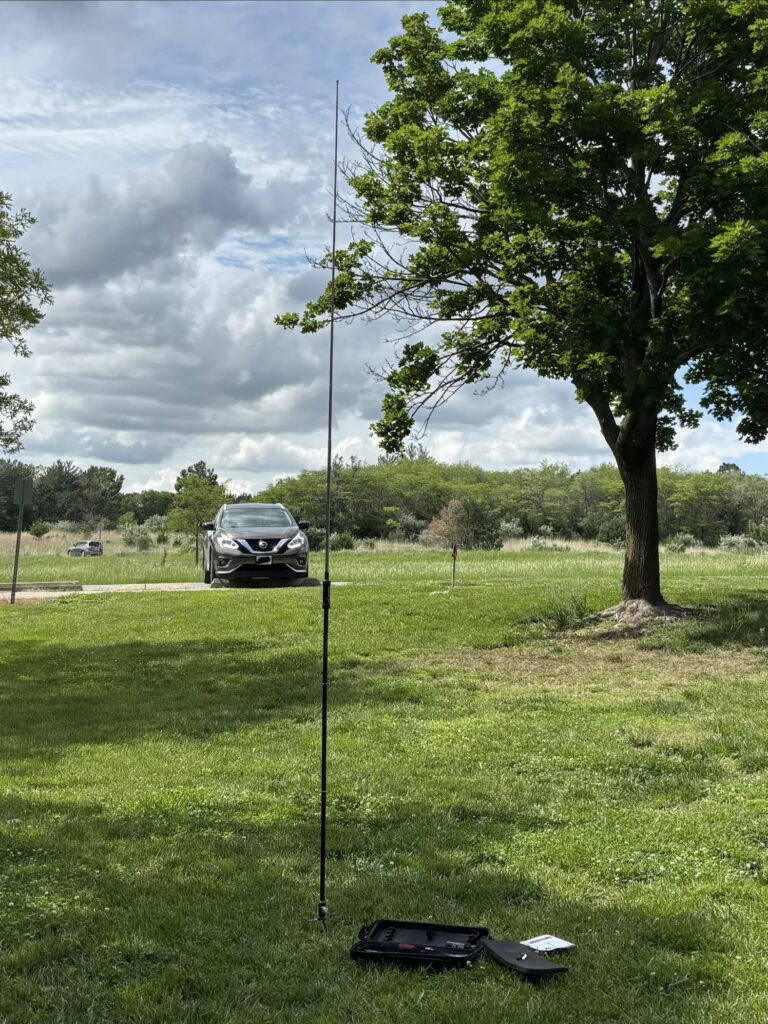
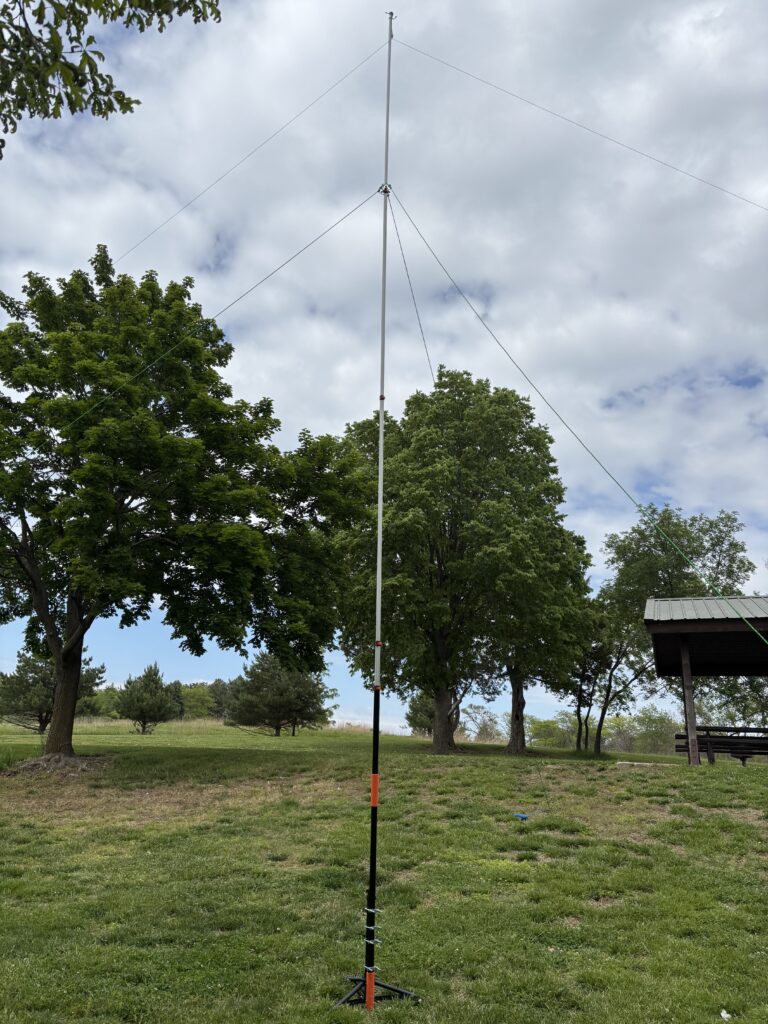
As I continue experimenting with portable HF operating, I recently added the Radioddity HF-010 portable antenna to my station. After spending time using an end-fed half-wave (EFHW) antenna supported by a telescoping mast, I was surprised by just how simple and convenient the HF-010 was to deploy.
One of the biggest advantages of the HF-010 is the setup time. My EFHW setup requires assembling the mast, securing guy lines, raising the mast, and deploying the wire antenna. I love my EFHW but it takes about 15-20 minutes for me to set it all up by myself.
The HF-010, on the other hand, can be deployed by myself in under 5 minutes. The antenna is compact, portable, and requires a lot less effort to set up in the field.
In addition to being easier to deploy, I found the HF-010 performed a lot better than my current EFHW setup. Signals were stronger, tuning was straightforward, and overall operation felt more efficient.
Using the HF-010, I was able to make additional FT8 contacts and continue building my digital mode experience. More importantly, the antenna helped me achieve a major milestone in my amateur radio journey, making my very first SSB voice contacts!
On May 21, 2026, I completed my first successful Parks on the Air (POTA) activation from US-4011 Chalco Hills State Recreation Area in Nebraska.
For this activation, I operated portable using my Xiegu G90 along with a telescoping mast and end-fed wire antenna setup. I used FT8 digital mode for the activation and operated from the park for about 45 minutes.
What I Learned
This activation was a huge milestone in my amateur radio journey. It was rewarding to finally combine portable operating, antenna setup, FT8, logging, and POTA spotting into a successful field activation. I’m looking forward to doing many more activations in the future and experimenting with additional bands and operating modes.
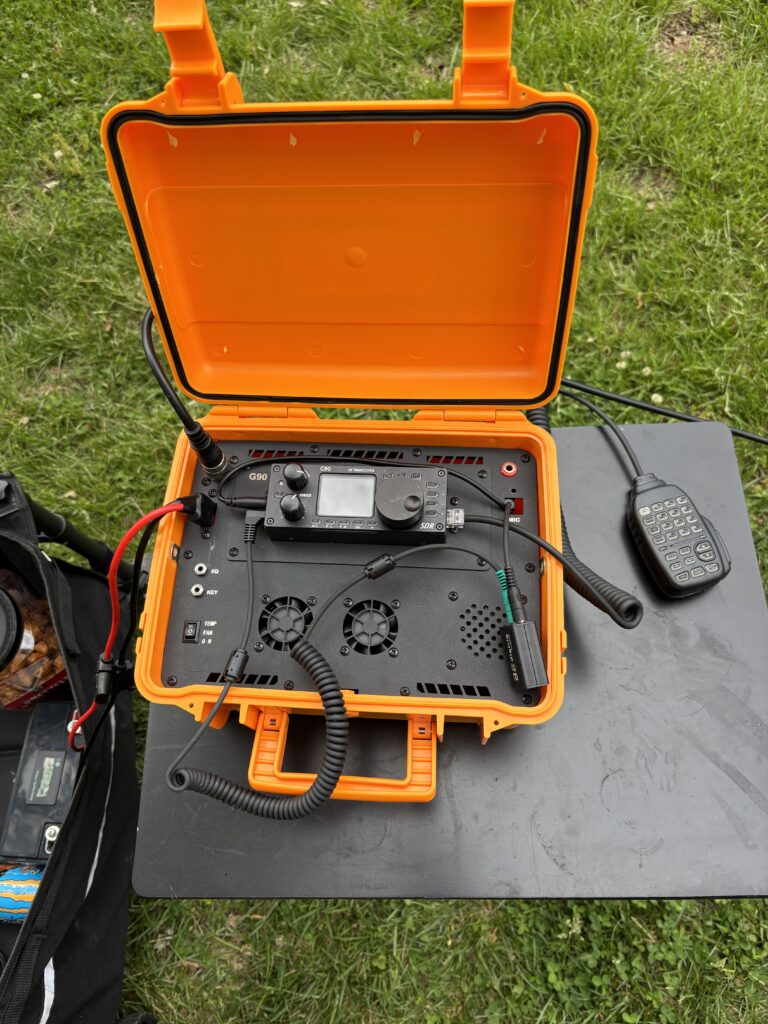
One of my recent amateur radio projects has been modifying and improving my portable Xiegu G90 go box setup.
I originally purchased the go box online, but I have continued modifying and customizing it to better fit my portable operating setup and field use.
Modifications & Upgrades
One of the first modifications I made was rewiring the external speaker connection after discovering the original audio connector was incorrect for my setup.
I also upgraded the cooling system by installing better cooling fans to improve airflow and help keep the radio cooler during longer operating sessions.
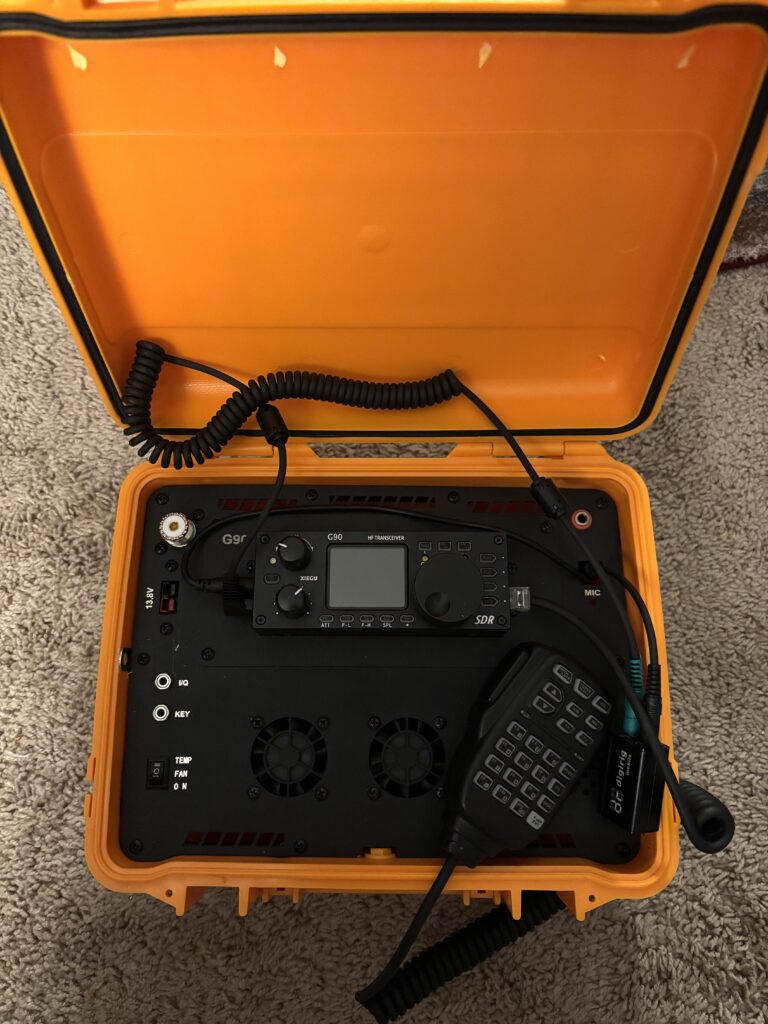
Another upgrade involved designing and using a 3D printed front panel mount for the removable G90 control head to improve mounting and portability.
I also integrated a DigiRig Mobile directly into the go box setup to support digital modes like FT8.
Portable HF Operation
I mainly use this setup for portable HF operation in parks and outdoor locations with my EFHW antenna and tripod-mounted painter’s pole setup.
The go box makes setup much faster and cleaner when operating portable, especially for voice contacts and digital modes like FT8.
Future Improvements
One of my next goals is to redesign the inside front panel layout to make the setup cleaner and more organized when the box is opened.
Right now, components like the DigiRig Mobile, PTT controls, and several cables are mounted on the inside front panel area. Everything fits inside the box correctly when it is closed, but when the front panel is opened, a lot of the wiring and accessories are visible.
In the future, I want to redesign the layout so more of the wiring, DigiRig hardware, and cabling are hidden underneath or behind the front panel itself instead of sitting exposed on top of it.
My goal is to create a much cleaner and more professional all-in-one portable setup while still keeping everything easy to access and maintain.
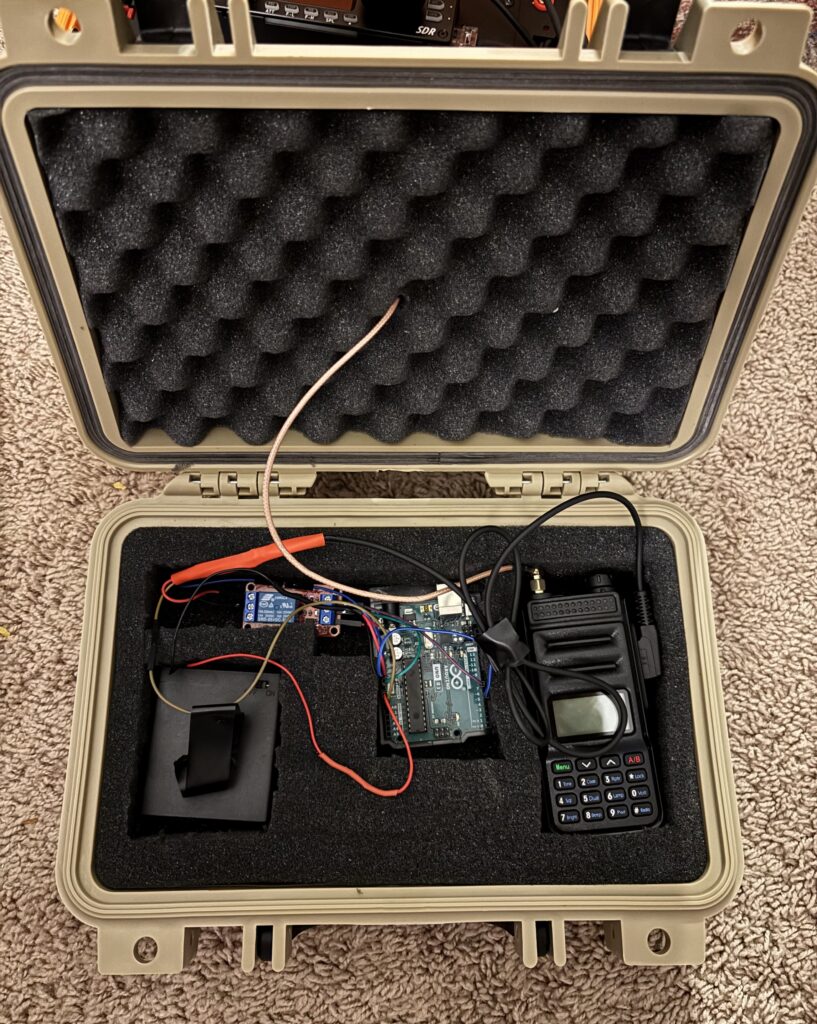
I built a fox hunt transmitter from scratch as one of my first hands-on amateur radio projects. Fox hunting, also called amateur radio direction finding, is where a hidden transmitter is placed somewhere and operators use radios and antennas to track it down.
For this project, I followed a build that uses an Arduino, a relay module, and a handheld radio to automatically key up and transmit an identifier. The end result is a simple transmitter that can be hidden for a fox hunt and found using radio direction finding.
How I Built It
The build started by modifying a handheld radio speaker/mic cable. I cut the cable, identified the internal wires, and used continuity testing with a multimeter to map the correct connections. After that, I soldered on new wires and used heat shrink to make the cable cleaner and more durable.
I then programmed an Arduino with fox transmitter code. The Arduino controls a relay module, which keys the radio and allows it to transmit automatically. The code can send an identifier and control the timing between transmissions.
What I Learned
This project helped me get more comfortable with soldering, continuity testing, Arduino programming, relay wiring, and radio control. It was also a good introduction to how simple hardware can be combined with amateur radio equipment to create something useful for club activities and field exercises.